Best Camping Mattress
We compared the self-inflating mats, air beds and ultralight pads Australians buy in 2026 on comfort, warmth, weight and packed size to find five worth packing, led by the Coleman Quick Bed.
Sleep Society is reader-supported. When you buy through links on this page we may earn an affiliate commission at no extra cost to you.
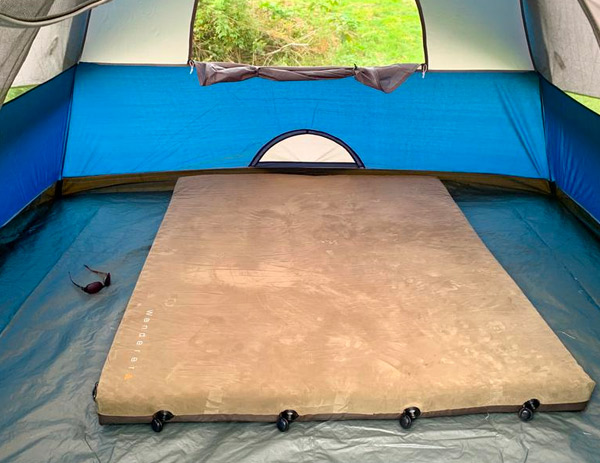
The 5 best camping mattresses in Australia
- 1Coleman Quick Bedbest camping mattress for couplesSee pick ↓
- 2Wanderer Tourer Extreme Queenbest for familiesSee pick ↓
- 3Trekology ALUFT-UL80V2best ultralight for backpackingSee pick ↓
- 4XTM Self Inflatable Mattressbest budget self-inflatingSee pick ↓
- 5Wanderer Tourer Extreme King Singlebest for solo campersSee pick ↓
A bad camping mattress ruins a good trip. You can have the right tent, the right bag and a perfect campsite, and still wake up sore and freezing because the thing between you and the ground gave up at 2am. The mattress is the piece of gear that decides whether you bounce out ready to hike or crawl out wrecked.
The trick is matching the mattress to the trip. Car campers and families can carry a thick, plush air bed; backpackers count every gram and every centimetre of packed size; cold-weather campers need insulation (an R-value) that a warm-weather sleeper can ignore. There is no single best camping mattress, only the best one for how you camp.
We compared the self-inflating mats, air beds and ultralight pads Australians actually buy in 2026 — on comfort, warmth, weight and packed size — and kept the five that suit the widest range of trips. Here they are.
Top 3 at a glance
Best for couples
Coleman Quick Bed
A plush double air bed with coil construction and a leak-free double-lock valve, rated to 800 lb and comfortable enough for car camping two-up.
Visit AmazonBest for families
Wanderer Tourer Extreme Queen
A 12 cm self-inflating queen with a memory-foam-feel top and four ports, big enough to share and quick to set up.
Visit BCFBest ultralight
Trekology ALUFT-UL80V2
A 750 g backpacking pad with tough 40D fabric, a fast enlarged valve and raised side rails that stop you rolling off.
Visit AmazonWhat’s the best camping mattress in Australia?
For most Australian campers in 2026, the best all-round camping mattress is the Coleman Quick Bed. It’s a genuine double air bed with a puncture-guard-bonded top that moulds to your body, a coil construction that supports two adults, and a leak-free double-lock valve that inflates and seals without a repair kit. Rated to 800 lb, it turns a tent floor into something close to a real bed — ideal for car camping, where weight doesn’t matter and comfort does.
Different trips, different picks. Families who want to share a big, warm surface should look at the 12 cm self-inflating Wanderer Tourer Extreme Queen. Backpackers counting grams want the 750 g Trekology ALUFT-UL80V2. On a budget, the compact XTM Self Inflatable is the easiest cheap self-inflater, and solo campers who want the Wanderer’s comfort in one berth should take the King Single.
1. Coleman Quick Bed (best for couples)
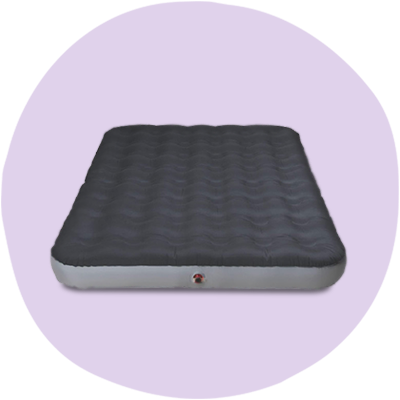
Type: Air bed (double)
Capacity: Up to 800 lb / two adults
Valve: Airtight double-lock
Best for: Car camping, couples
Rating: ★★★★☆ (4.5/5)
Check Deal
The Coleman Quick Bed is the closest thing to sleeping in your own bed under canvas. A puncture-guard-bonded top layer flexes to your body shape, the fabric is genuinely soft against skin, and the internal coil construction supports two adults without the sagging middle that ruins cheap air beds.
It’s built for reliability. An airtight, leak-free construction and a double-lock valve let you inflate it fully and seal it with no fiddling and no repair kit, and it holds pressure through the night. Rated to 800 lb, it comfortably handles a couple plus a restless kid or dog.
The trade-off is weight and packed size — this is a car-camping bed, not a backpacking pad. But if you drive to your campsite, nothing else on this list is as comfortable to share, and it rolls back into storage without a fight.
Pick if...
You drive to your campsite, sleep two-up and want plush, bed-like comfort over low weight.
Pros
- Sleeps two comfortably: coil construction resists the sagging middle
- Leak-free double-lock valve: inflates and seals with no repair kit
- Body-moulding soft top: puncture-guard bonded surface
- Rated to 800 lb: handles a couple plus extras
Cons
- Heavy and bulky: a car-camping bed, not for backpacking
- No built-in insulation rating: add a pad or blanket underneath for cold nights
- Needs a pump: not self-inflating
| Spec | Detail |
|---|---|
| Type | Double air bed |
| Support | Internal coil construction |
| Capacity | Up to 800 lb |
| Valve | Double-lock, leak-free |
| Best use | Car camping, couples |
Sold on Amazon AU, where the price moves with stock and promotions — check the current listing before you buy. Specs confirmed July 2026.
2. Wanderer Tourer Extreme Queen (best for families)
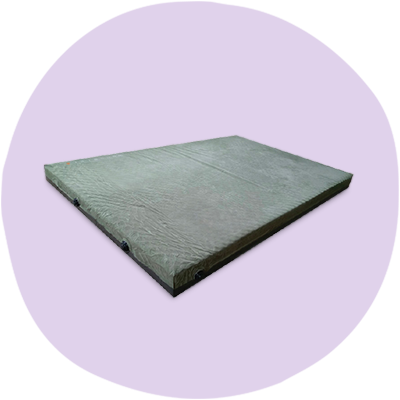
Type: Self-inflating (queen)
Thickness: 12 cm
Top: Memory-foam-feel flocked surface
Ports: Four, for fast inflate/deflate
Rating: ★★★★☆ (4.4/5)
Check Deal
The Wanderer Tourer Extreme Queen is the family workhorse. At queen size with 12 cm of cushioning it’s big enough for two adults or a parent and kids, and the soft flocked, memory-foam-feel top takes the edge off uneven or rocky ground far better than a thin pad.
It’s a self-inflating mat with four ports, so it does most of the work itself and tops up quickly with a pump; letting the air out at pack-up is just as fast. A durable PVC base stands up to campsite floors, and it comes with its own carry bag to keep it protected between trips.
It’s heavier and bulkier than a backpacking pad, so this is one for the boot of the car rather than your shoulders. For family and 4x4 camping where comfort and size matter more than grams, it’s the pick.
Pick if...
You camp as a family or couple from the car and want a thick, warm, share-friendly surface.
Pros
- 12 cm of cushioning: smooths out rocky, uneven ground
- Queen size: genuinely shareable for two
- Four-port self-inflating: fast to set up and pack down
- Durable PVC base and carry bag: built for repeated 4x4 trips
Cons
- Bulky and heavy: a car-camping mat, not for hiking
- Needs a pump to top up: self-inflation gets it most of the way
- Big packed size: takes real boot space
| Spec | Detail |
|---|---|
| Type | Self-inflating, queen |
| Thickness | 12 cm |
| Top surface | Flocked, memory-foam feel |
| Ports | Four |
| Base | Durable PVC, carry bag included |
Sold at BCF, where the price moves with stock and promotions — check the current listing before you buy. Specs confirmed July 2026.
3. Trekology ALUFT-UL80V2 (best ultralight for backpacking)
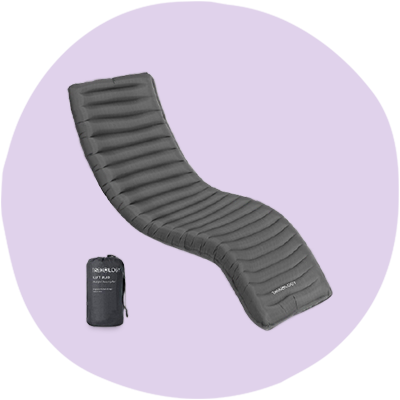
Type: Inflatable ultralight pad
Weight: About 750 g
Fabric: 40D tear-resistant
Feature: Raised side rails, enlarged valve
Rating: ★★★★☆ (4.5/5)
Check Deal
For anyone carrying their bed on their back, the Trekology ALUFT-UL80V2 is the standout. It weighs about 750 g and packs down small enough to disappear into a backpack, yet its curved, raised side rails cradle you and stop the middle-of-the-night roll-off that plagues flat pads.
An enlarged air valve makes inflation quick with an electronic pump — ready in seconds — and deflation is just as fast: open the valves and the pressure dumps out. Despite the low weight, the 40D fabric resists ripping, so it survives real trail use rather than falling apart after a season.
It won’t match a 12 cm air mat for plushness, and there’s no built-in warmth rating, so pair it with an insulated layer in the cold. But gram for gram of comfort, it’s the best hiking option here.
Pick if...
You hike to camp and weight and packed size matter more than plush thickness.
Pros
- About 750 g: packs down small for backpacking
- Raised side rails: keep you centred and stop roll-off
- Enlarged fast valve: inflates in seconds, deflates instantly
- 40D tear-resistant fabric: tough for the low weight
Cons
- Thinner than an air mat: less plush than car-camping options
- No insulation rating: add a warm layer for cold ground
- Pump recommended: easiest to inflate with an electric pump
| Spec | Detail |
|---|---|
| Type | Ultralight inflatable pad |
| Weight | About 750 g |
| Shape | Curved with raised side rails |
| Fabric | 40D tear-resistant |
| Valve | Enlarged, fast inflate/deflate |
Sold on Amazon AU, where the price moves with stock and promotions — check the current listing before you buy. Specs confirmed July 2026.
4. XTM Self Inflatable Mattress (best budget self-inflating)
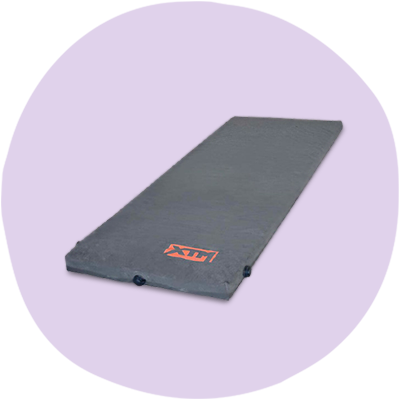
Type: Self-inflating (single)
Thickness: 8 cm
Top: Soft flocked surface
Ports: Three, for quick inflate/deflate
Rating: ★★★★☆ (4.3/5)
Check Deal
The XTM Self Inflatable Mattress is the easy, affordable way into self-inflating comfort. Open the valves and it fills itself; lie down on the soft flocked top and 8 cm of foam-and-air keeps you off the cold ground far better than a bare mat, which makes it a genuine help for anyone with a sensitive back.
Three ports mean it inflates and deflates quickly, and its compact 8 cm profile folds down small into its own carry bag — noticeably more packable than the 12 cm Wanderer mats. A tough PVC base takes the abuse of campsite floors and resists wear.
At single size it’s a solo mat, and it’s thinner than the premium options, so committed side sleepers may want more. But as a low-cost, low-fuss self-inflater it punches above its price.
Pick if...
You want cheap, compact self-inflating comfort for one and a bit of back support.
Pros
- Self-inflating: open the valves and it fills itself
- Compact 8 cm profile: packs smaller than thicker mats
- Soft flocked top: comfortable and warmer than a bare mat
- Tough PVC base: stands up to campsite floors
Cons
- Single size only: a solo mat, not for sharing
- Thinner at 8 cm: dedicated side sleepers may want more
- Still needs a top-up: a few breaths finish the inflation
| Spec | Detail |
|---|---|
| Type | Self-inflating, single |
| Thickness | 8 cm |
| Top surface | Soft flocked |
| Ports | Three |
| Base | PVC, carry bag included |
Sold at BCF, where the price moves with stock and promotions — check the current listing before you buy. Specs confirmed July 2026.
5. Wanderer Tourer Extreme King Single (best for solo campers)
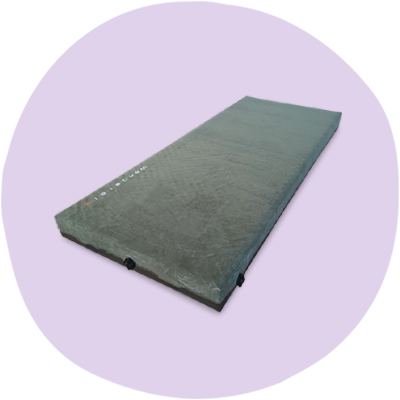
Type: Self-inflating (king single)
Thickness: 12 cm
Top: Soft flocked, memory-foam feel
Ports: Three, auto inflate/deflate
Rating: ★★★★☆ (4.4/5)
Check Deal
The Wanderer Tourer Extreme King Single gives one camper the same 12 cm of plush cushioning as the family queen, in a berth that fits a single swag or tent bay. It behaves like a self-inflating mat — three ports do most of the inflating and deflating — though you’ll finish it with a pump for full firmness.
That extra thickness pays off in warmth and comfort: 12 cm of loft keeps body heat off the ground far better than a thin pad, and the soft flocked top feels closer to a real mattress than most camping mats. A heavy-duty PVC base carries solid weight and shrugs off rough surfaces.
Like its queen sibling it’s bulky and best suited to car and 4x4 camping rather than hiking. For a solo camper who wants comfort over portability, it’s the most bed-like single here.
Pick if...
You camp solo from the car and want maximum thickness and warmth in a single berth.
Pros
- 12 cm loft: warm and plush for one
- Flocked memory-foam-feel top: close to a real mattress
- Three-port self-inflating: quick to set up and pack down
- Heavy-duty PVC base: handles rough campsite floors
Cons
- Bulky: car camping, not for backpacking
- Single berth: no room to share
- Pump top-up needed: for full firmness
| Spec | Detail |
|---|---|
| Type | Self-inflating, king single |
| Thickness | 12 cm |
| Top surface | Flocked, memory-foam feel |
| Ports | Three |
| Base | Heavy-duty PVC |
Sold at BCF, where the price moves with stock and promotions — check the current listing before you buy. Specs confirmed July 2026.
How we choose camping mattresses
There’s no single winner in camping gear, only the right tool for the trip, so we test every mattress against the way it’ll actually be used. For each pick we:
- Matched the mattress to the trip — plush air beds and thick self-inflaters for car and family camping, ultralight pads for anyone carrying their bed on their back.
- Judged comfort and thickness — how well the surface smooths out rocky ground and supports a side sleeper, not just the headline loft figure.
- Weighed warmth — thicker mats and self-inflaters keep body heat off the cold ground; where a mat has no insulation rating, we say so and suggest a layer underneath.
- Checked weight and packed size — the numbers that decide whether a mat comes hiking or stays in the boot.
- Looked at valves, durability and repairability — leak-free valves, tear-resistant fabric, tough bases and an included carry bag or repair kit.
Sleep Society may earn a commission if you buy through links on this page. It never changes our order — the Coleman leads for comfort and value, and the ultralight Trekology wins for hikers, on the merits.
What to look for in a camping mattress
1. Match the type to your trip
Air beds are plush and great for car camping but heavy; self-inflating mats balance comfort and pack size for most campers; foam pads are cheap, indestructible and warm but bulky; ultralight inflatable pads are the backpacker’s choice. Decide how you travel first, then pick the type.
2. Thickness and sleep position
Side sleepers need more loft to cushion hips and shoulders — aim for around 8 cm or more — while back sleepers can get away with less. Thicker mats also keep you further off cold ground.
3. Warmth and R-value
Insulation is measured as an R-value. For all-season Australian camping look for roughly R3 to R5; for snow, higher. Not every camping mat quotes one, so if you camp cold, choose a mat with a rating or add a foam pad underneath.
4. Weight and packed size
This is the make-or-break number for hikers. Ultralight pads like the Trekology sit near 750 g and pack tiny; thick self-inflating queens weigh several kilos and fill a boot. Car campers can ignore it; backpackers can’t.
5. Valves and inflation
Look for leak-free, ideally dual or multi-port valves that inflate and deflate fast. Self-inflating mats still usually need a few breaths or a pump to finish; a good valve saves you doing it by lung.
6. Durability and repair
PVC or TPU-nylon bases and a higher denier (40D and up) resist punctures and tears. A carry bag protects the mat between trips, and a repair patch kit is cheap insurance against a slow leak miles from anywhere.
FAQs
How long does a self-inflating mattress take to inflate?
Most self-inflating mats reach full size in about five to fifteen minutes with the valve open; a large queen can take up to twenty. If it stalls short of firm, a few breaths into the valve or a quick pump finishes the job.
Can air mattresses be used for cold camping?
They can, but a plain air bed transfers cold from the ground and can leave you chilly. Choose one with an insulation rating and a reinforced base, add a foam pad underneath, and dress in warm layers. A self-inflating mat with foam inside handles the cold better than a bare air bed.
What thickness of camping mattress do I need?
For most campers 8 cm is comfortable; side sleepers and anyone on rocky ground are better on 10–12 cm. Backpackers trade some thickness for weight, which is where an ultralight pad with raised side rails earns its place.
Self-inflating mat or air bed — which is better?
Air beds are plushest and best for car camping two-up; self-inflating mats are warmer, less puncture-prone and pack smaller, which suits most campers. Backpackers skip both for an ultralight inflatable pad. It comes down to how you travel and how much weight you’ll carry.
How do I stop my camping mattress going flat overnight?
Most overnight softening is temperature, not a leak — air contracts as the night cools, so inflate to firm and expect a little give. If it goes properly flat, check the valve is fully sealed and run the mat over a repair-kit patch check. Keep it off sharp sticks and stones with a groundsheet.
Sources
- Wikipedia – ‘Sleeping pad’
- Wikipedia – ‘R-value (insulation)’
- Sleep Foundation – ‘Bedroom Environment’
- Healthdirect – ‘Back pain’